




All About EPDM Rubber
-
-
1. Basic Definition
-
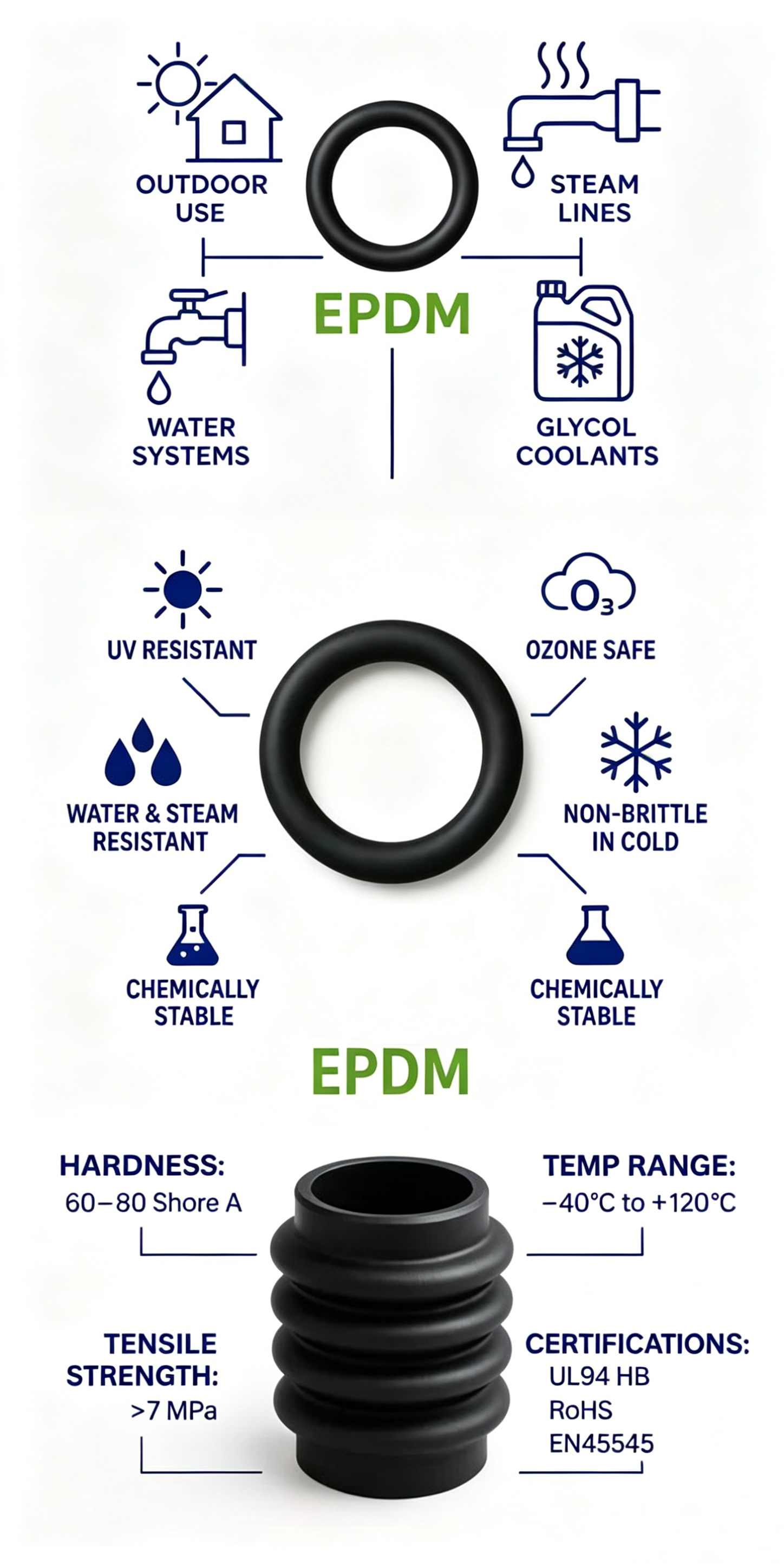
Synthetic elastomer: Ethylene + Propylene + Diene monomer
-
Hardness: 60–80 Shore A
-
Temp range: -40°C to +120°C (up to 150°C)
-
Tensile strength: >7 MPa
-
Certifications: UL94 HB, RoHS, EN45545
-
-
2. Structure & Production
-
Monomers
-
Ethylene: Flexibility, low-temp stability
-
Propylene: Weather & ozone resistance
-
Diene (ENB/DCPD): Crosslinking for vulcanization
-
-
Vulcanization: Sulfur or peroxide crosslinking
-
Advantages: Saturated backbone; UV/ozone resistance; long service life
-
-
3. Key Properties
-
Weather/Ozone resistance: Excellent
-
Water/Steam resistance: Excellent
-
Temp range: -40°C ~ +130°C
-
Chemical resistance: Good (water, alkali, mild chemicals)
-
Oil resistance: Poor
-
Electrical insulation: Good
-
Flexibility: High; non‑brittle in cold
-
-
4. Typical Applications
-
Automotive: Door seals, window gaskets, hoses
-
HVAC: Duct seals, pipe gaskets, vibration pads
-
Construction: Roofing membranes, waterproofing, window gaskets
-
Fluid systems: O‑rings, pipe seals, pump gaskets
-
Electrical: Cable grommets, insulation sleeves
-
-
5. Comparison vs Other Rubbers
-
vs NBR: Better weather/ozone; worse oil resistance
-
vs Silicone: Lower max temp; lower cost
-
vs FKM: Lower chemical resistance; much lower cost
-
-
6. Grades & Certifications
-
FDA: Food contact, potable water
-
WRAS: Drinking water systems
-
EN: Building, HVAC, automotive
-
UL: Flame‑retardant applications
-
-
7. Customization
-
Hardness: 40–90 Shore A
-
Color: Any color
-
Shape: Molded, extruded, die‑cut profiles
-
Surface: Smooth, textured, flocked
-
-
8. Selection Checklist
-
Oil/solvent exposure? (If yes: NBR/FKM)
-
Operating temp range
-
Required certifications (FDA, WRAS, EN, UL)
-
Hardness, color, surface finish
-
UV/weather/ozone critical?
-
-
.png)