




How Do Inductive, Capacitive, and Resistive Loads Differ ?
-
-
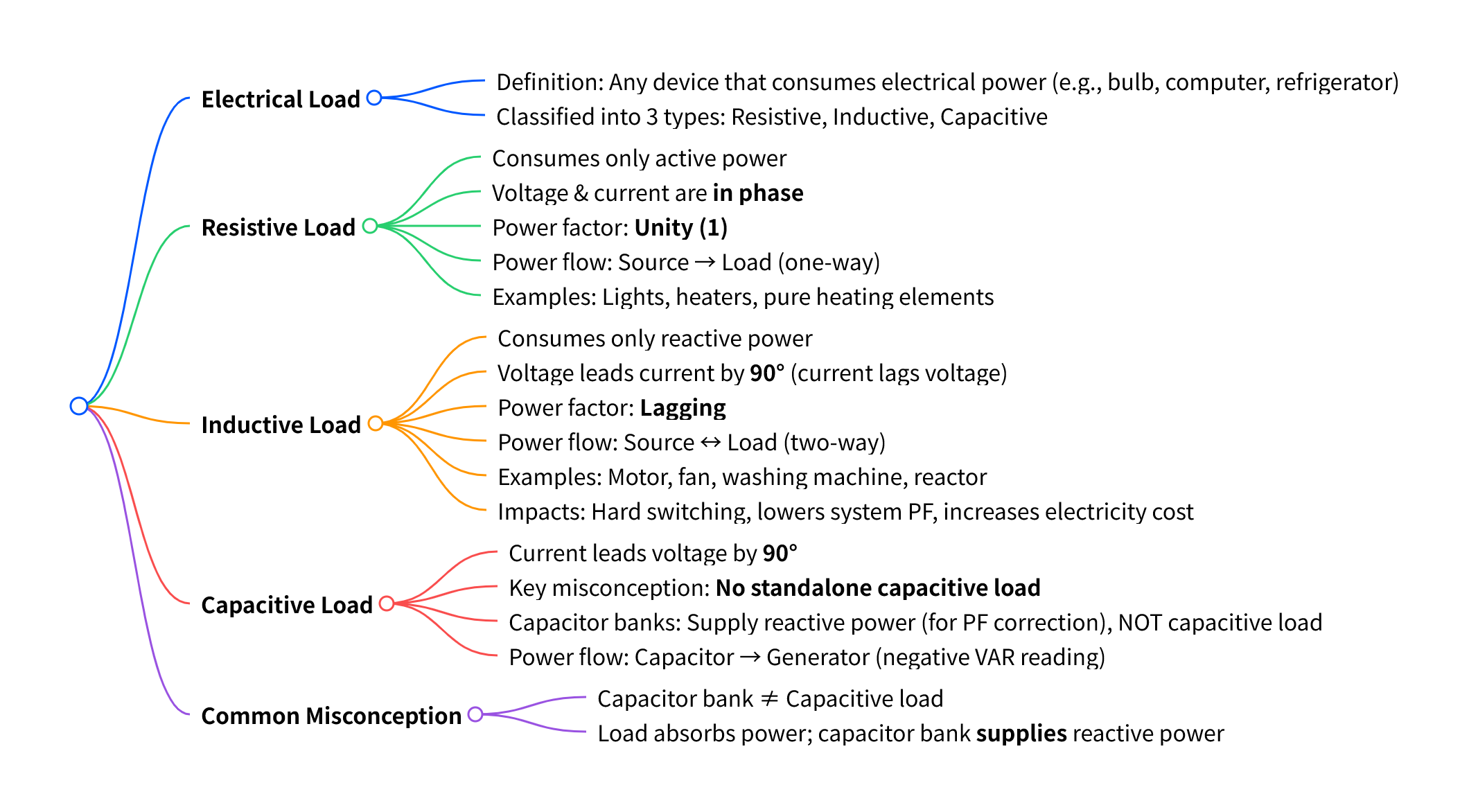
Electrical Load
-
Definition: Any device that consumes electrical power (e.g., bulb, computer, refrigerator)
-
Classified into 3 types: Resistive, Inductive, Capacitive
-
-
Resistive Load 阻性负载
-
Consumes only active power
-
Voltage & current are in phase
-
Power factor: Unity (1)
-
Power flow: Source → Load (one-way)
-
Examples: Lights, heaters, pure heating elements
-
-
Inductive Load 感性负载
-
Consumes only reactive power
-
Voltage leads current by 90° (current lags voltage)
-
Power factor: Lagging
-
Power flow: Source ↔ Load (two-way)
-
Examples: Motor, fan, washing machine, reactor
-
Impacts: Hard switching, lowers system PF, increases electricity cost
-
-
Capacitive Load 容性负载
-
Current leads voltage by 90°
-
Key misconception: No standalone capacitive load
-
Capacitor banks: Supply reactive power (for PF correction), NOT capacitive load
-
Power flow: Capacitor → Generator (negative VAR reading)
-
-
Common Misconception
-
Capacitor bank ≠ Capacitive load
-
Load absorbs power; capacitor bank supplies reactive power
-
-
⬛️
.png)