




Key Differences of Three Types of Electrical Loads
-
-
Electrical Loads: Inductive, Capacitive & Resistive
-
Core Purpose: Understand differences for stable & efficient circuit design
-
-
1. Inductive Load
-
Definition: Uses magnetism; opposes current change; stores energy in magnetic field
-
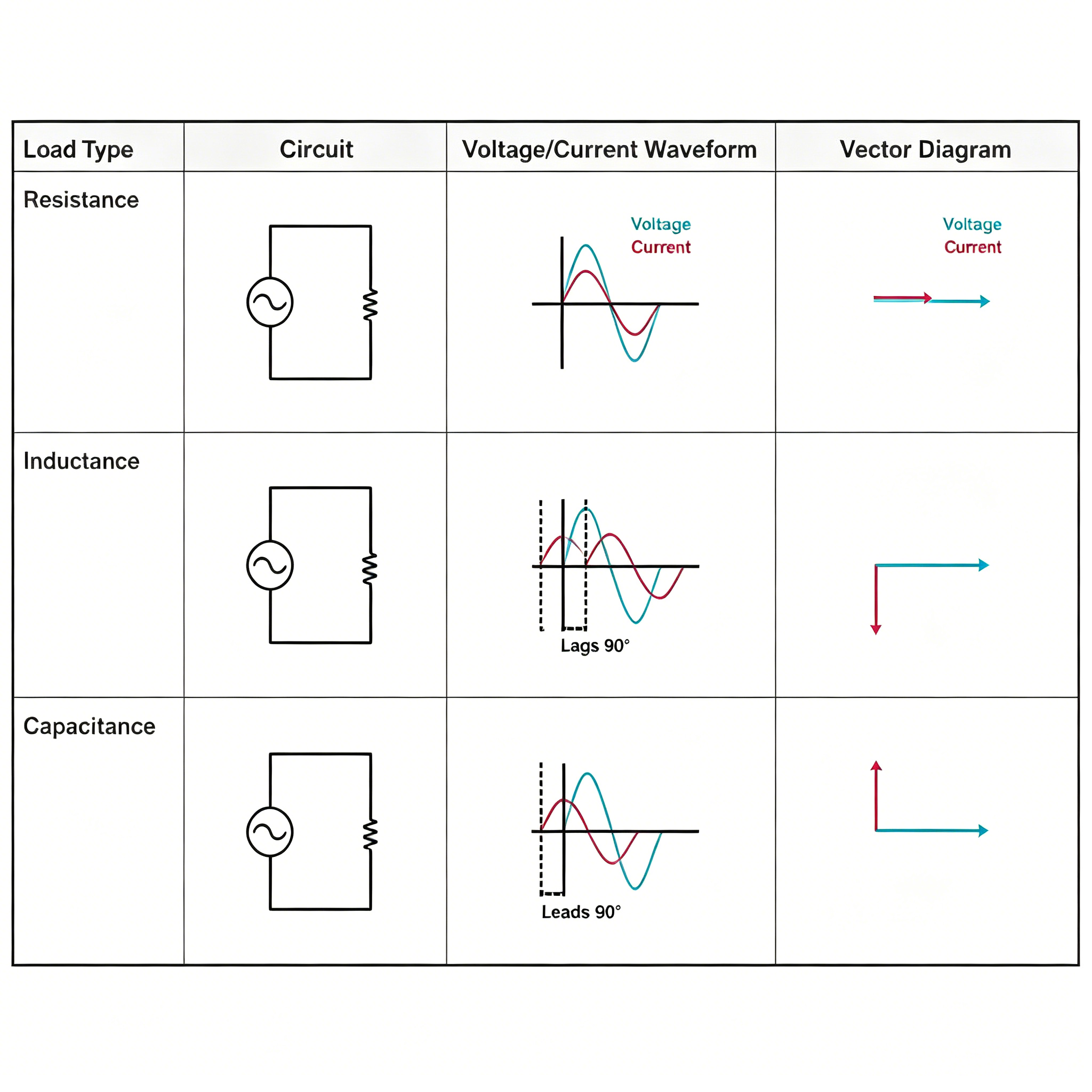
Phase: Current lags voltage
-
Power Factor: Lagging (low)
-
Start-Up: High inrush current
-
Risks: Back EMF, voltage spikes, arcing
-
Management:
-
Soft starters / NTC thermistors (inrush control)
-
Snubbers / surge arresters (spike protection)
-
Capacitor banks (power factor correction)
-
Arc-suppressed switching devices
-
-
Applications: Motors, transformers, relays, solenoids, induction heaters
-
-
2. Capacitive Load
-
Definition: Stores energy in electric field; current leads voltage
-
Phase: Current leads voltage
-
Power Factor: Leading (low)
-
Start-Up: Instant leading current
-
Risks: Overvoltage, harmonics, resonance
-
Uses:
-
Power supplies & filters
-
Motor start capacitors
-
Power factor correction banks
-
Grid voltage stabilization
-
-
Challenges:
-
Overvoltage & harmonic control
-
Avoid resonance with inductive loads
-
Load balancing in mixed systems
-
-
-
3. Resistive Load
-
Definition: Converts electricity directly to heat; no energy storage
-
Phase: Voltage & current in phase
-
Power Factor: Unity (1.0)
-
Start-Up: Stable, immediate current draw
-
Benefits:
-
Stable output
-
High efficiency
-
Easy setup & wiring
-
-
Examples:
-
Industrial heating elements
-
Incandescent lamps, ovens
-
Load banks for testing
-
-
Risk: Overload heating
-
-
4. Usage & Safety
-
Proper Wiring:
-
Resistive: Standard protection
-
Inductive: Slow fusing, arc-rated switches
-
Capacitive: Surge protection + discharge paths
-
-
Load Matching: Size to system voltage; account for inrush/reactive balance
-
Safety:
-
Resistive: Thermal fuses
-
Inductive: Arc suppression, soft starters
-
Capacitive: Discharge resistors
-
-
-
5. Key Comparison
-
Energy Storage: Inductive (magnetic) | Capacitive (electric) | Resistive (none)
-
Phase: Lag | Lead | In-phase
-
PF: Lagging | Leading | Unity
-
Risk: Spikes/arcing | Resonance/overvoltage | Overheating
-
Typical Uses: Motors/transformers | PF correction/filters | Heaters/lamps
-
-
.png)
⬛️
.png)